Investing in early childhood development (ECD) infrastructure offers a practical pathway for private sector contributions to support the national ECD improvement push. When children have access to safe, well-maintained early learning environments, the benefits extend well beyond the classroom. Quality ECD infrastructure enables women to participate in the economy, creates employment for community members, supports children’s health and nutrition and builds the conditions for sustained educational progress, sorely needed priorities in South Africa’s challenged development space.
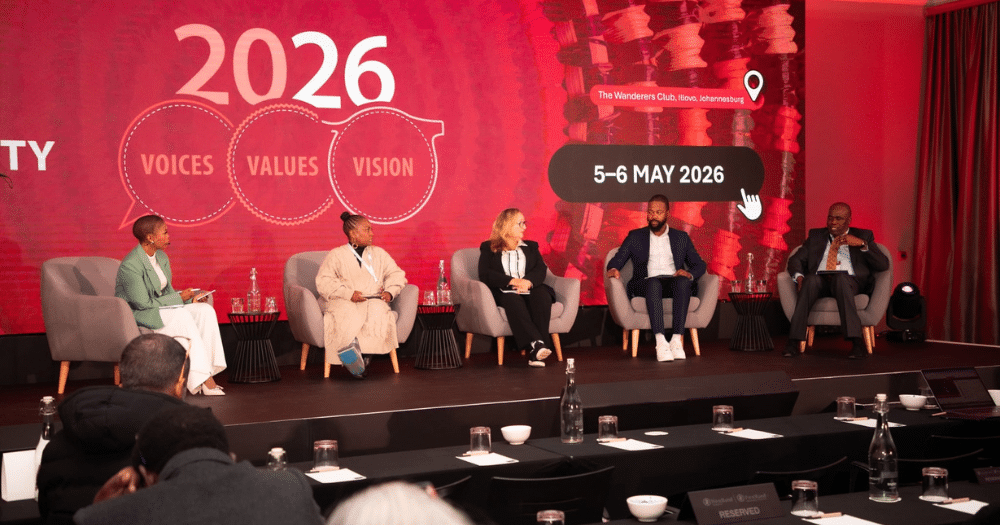
These interconnected benefits were the focus of a Development Bank of Southern Africa (DBSA) sponsored panel discussion at the Trialogue Business in Society Conference 2026, in May. The session brought together leaders in development finance, civil society and philanthropy at the to consider what it takes to establish and sustain ECD infrastructure, as well as the national benefits such investment brings.
The value of getting infrastructure right early
DBSA infrastructure delivery group executive Chuene Ramphele opened the discussion by positioning ECD infrastructure within a broader development argument. He pointed to good infrastructure as a catalyst towards achieving sustainable development goals. “We believe that ramping up investment in ECD is the right approach to designing a productive generation that will be environmentally, socially and economically relevant,” he said.
Ramphele described the components of quality ECD infrastructure in practical terms, including safely constructed buildings, dignified sanitation, access to clean water and safe energy, proper food preparation facilities and appropriate outdoor spaces. He also drew attention to an often-overlooked dimension of infrastructure, the human and governance capacity required to maintain it. Drawing on the widely-recognised national issue of maintenance neglect leading to service delivery failures and public loss of access to services, Ramphele pointed out the contrast of how protecting infrastructure makes the case for further investment.
He noted that a culture of care for infrastructure can be cultivated from an early age, with children in ECD settings learning to turn off taps and pick up litter as a starting point.
Early Care Foundation CEO Ipeleng Mohlala reinforced this framing, noting that meeting Department of Basic Education compliance requirements is not a bureaucratic exercise but a meaningful threshold: “If children are in unsafe, unhealthy spaces, they are unable to thrive.” Compliance creates the conditions under which quality programmes, appropriate teacher-to-child ratios, nutrition and other essentials can be delivered.
ECD centres as community and economic assets
The panellists agreed that early learning centres serve communities in ways that extend beyond early education. Mohlala noted that ECD centres create meaningful local employment and function as community assets in their own right.
Ilifa Labantwana CEO Senzo Hlophe drew a direct line between ECD infrastructure and women’s economic participation. In communities where early learning programmes cannot provide safe environments for children, women are often unable to pursue income-generating opportunities. “Places of care are the enablers of women being able to seek livelihood opportunities,” he said. “If we invest in infrastructure, we’re not just investing in building, we’re actually investing in women.”
Oppenheimer Memorial Trust CEO Tracey Webster cited research indicating that funding interventions targeting children under seven has measurable long-term effects on gross domestic product. She pointed to opportunities across the full ECD value chain, from food provisioning to educational resource manufacture, as areas where broader economic participation could be encouraged, particularly among young people.
A well-supported national effort with room for private sector contribution
Panellists called attention to the 2025 Treasury commitment to invest an additional R10 billion in ECD over the next three years as an opportunity for the private sector to support the investment for the best possible outcomes.
The Bana Pele social compact has established a public digital platform to identify ECD sites requiring infrastructure support and assist them in qualifying for government subsidies. Organisations including the DBSA, the Oppenheimer Memorial Trust, the Early Care Foundation and Ilifa Labantwana have plans, procurement processes and service providers in place to support such efforts.
For the private sector, Webster outlined several practical ways to contribute. She suggested aligning funding support to existing plans, directing Mandela Day activities toward ECD infrastructure projects and coordinating efforts to complement rather than duplicate what is already under way. Mohlala noted that the sector should also explore ways to reach and support centres that face particular challenges in achieving compliance, calling for inclusive, multistakeholder approaches to extend the benefits of funding as widely as possible.
Ramphele emphasised the power of collective action and connected mandates. The DBSA’s model for ECD infrastructure deliberately builds community governance, provides basic facilities management training and engages local businesses in cooperative efforts, a model he sees as a template for how collaboration between government, development finance institutions and the private sector can be structured. “The power of collaboration really becomes a very important element,” he said, “not just collaborating, but connecting in terms of our mandates and collectively beginning to ensure the functionality of this to service our nation.”
The full panel discussion, DBSA: Why early childhood development infrastructure matters, from the Trialogue Business in Society Conference 2026 is available to watch online.